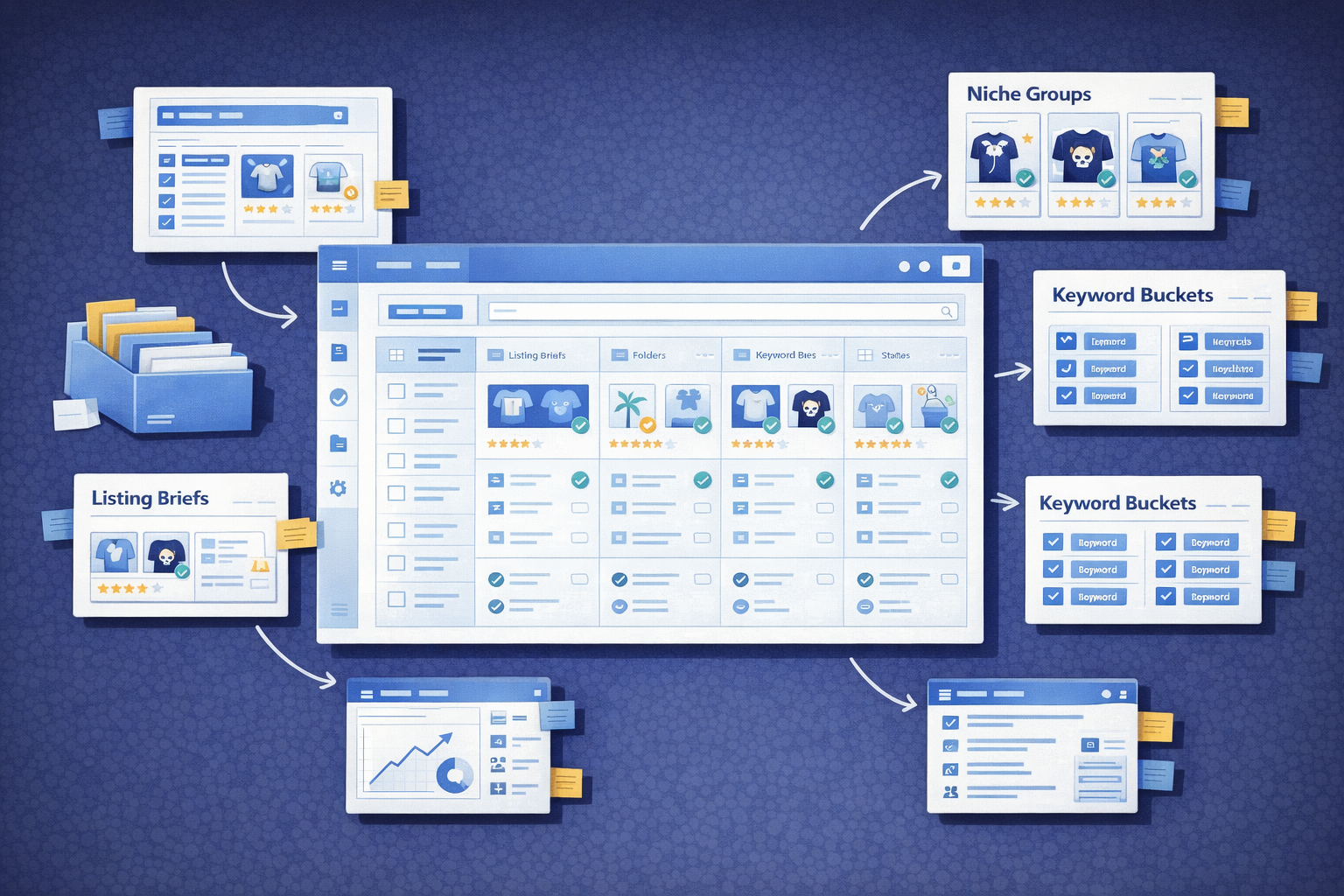
Building a print-on-demand (POD) business is exciting — new designs, creative ideas, and limitless opportunities. But without a solid system to organize everything, even great products get lost in the noise. The difference between a hobby shop and a real business is structure.
In this post, we'll break down how to organize your POD business around systems — not tasks — so you can scale confidently. Whether you sell on Etsy, Amazon Merch, Redbubble, or all three, this approach will help you stay efficient, on-brand, and profitable.
Why Structure Matters in POD
Print-on-demand is deceptively complex. Between your designs, keywords, listings, suppliers, and order management, you've got dozens of moving parts. The key is turning randomness into repeatable process.
Strong business organization:
- Saves hours of manual tracking and guesswork.
- Keeps your listings aligned with proven SEO data.
- Allows faster scaling when you add new stores or designs.
- Prevents errors, duplicates, and disorganized work.
In short: structure gives you predictability, and predictability drives profit.
1. Organize by Niche
The foundation of a scalable POD business starts with niche organization. Instead of jumping from idea to idea, group your efforts by niche categories and build deep within them.
Tips for Niche Organization
- Maintain a "Niche Library" with sections for each audience (pets, fitness, careers, etc.).
- Record common themes, tone, and keywords for each niche.
- Track evergreen vs. seasonal niches to balance your catalog.
- Avoid spreading too thin — dominate a few niches first.
PODTrackerPRO Feature
In PODTrackerPRO, you can catalog each niche, attach related keyword lists, and link them to your product designs for instant reference.
2. Organize Ideas and Design Briefs
Fresh ideas fuel your POD business, but without structure, they slip through the cracks. Treat ideas like business assets — document them properly from concept to upload.
Set Up a Design Brief System
- Capture every idea (with notes or reference links).
- Include target niche, style notes, and possible slogans.
- Define product types and design orientation before creating artwork.
- Tag each idea with "status" (concept, design started, uploaded, published).
This helps you track what's in progress and ensures consistent branding across your store.
PODTrackerPRO Feature
PODTrackerPRO turns design briefs into actionable tasks. You can store references, assign statuses, and connect each brief to final listings once published.
3. Organize Keywords and SEO Data
SEO drives visibility — but keyword chaos kills efficiency. If your keywords scatter across spreadsheets or notes, you'll end up duplicating effort and missing opportunities.
Best Practices for Keyword Organization
- Maintain a master keyword database per niche.
- Evaluate metrics like search volume, competition, and trend cycles.
- Use consistent naming conventions across Etsy, Amazon Merch, and Redbubble.
- Track keyword performance to refine old listings over time.
PODTrackerPRO Feature
PODTrackerPRO acts as your keyword command center, automatically organizing lists and syncing them across platforms so you can see what converts best.
4. Organize Listings and Product Data
Each listing has multiple data points — titles, descriptions, tags, mockups, and pricing. Without a structured system, version control becomes a nightmare.
Listing Management System
- Store listing details by platform and marketplace.
- Standardize title and tag formatting (e.g., "funny nurse mug" vs "nurse humor coffee cup").
- Track design usage — which designs appear on which products.
- Keep notes on platform-specific adjustments (image sizes, tag limits, etc.).
This structure also supports A/B testing and helps you optimize old listings without losing oversight.
PODTrackerPRO Feature
PODTrackerPRO centralizes all listing info, so you can update or track items across marketplaces — no more duplicated rows or partial data.
5. Streamline Your Workflow
Once your assets are organized (niches, keywords, listings), tie them together into a daily workflow. The goal is consistency — to move from brainstorming to publishing efficiently.
Example Weekly Workflow
| Day | Focus |
|---|---|
| Monday | Research and log new niche opportunities. |
| Tuesday | Create or refine design briefs. |
| Wednesday | Upload finished designs and manage listings. |
| Thursday | Review analytics and keyword performance. |
| Friday | Plan next week's focus areas based on data. |
A set rhythm prevents overwhelm and keeps progress visible week to week.
PODTrackerPRO Feature
PODTrackerPRO's dashboard helps structure your weekly pipeline — from idea to upload — with clear visibility into statuses, performance, and revenue trends.
Turning Organization into Growth
The best-organized POD businesses operate like mini agencies. Each element — niche, keyword, design, and listing — connects through a structured system that grows more valuable over time.
Instead of reacting to trends or guesswork, you'll make decisions from organized data and proven patterns. That's how sustainable POD brands are built.
PODTrackerPRO: Your Print-on-Demand Operating System
Think of PODTrackerPRO not just as a tracking tool, but as your business operating system.
With it, you can:
- Centralize niches, designs, listings, and performance metrics.
- Build repeatable workflows with status tracking and keyword insights.
- Eliminate spreadsheet clutter with one dashboard that shows everything.
- Scale across multiple marketplaces without losing consistency.
Final Thoughts
Organization isn't just about tidiness — it's a competitive advantage. The more structured your POD systems are, the more time you reclaim for creativity, marketing, and growth.
Structure creates scale.